Workers who change jobs usually see faster wage growth than those who stay put. In the middle of 2025 that premium vanished, something that had happened before only in the slack labor markets of 2003–2004 and 2009–2010, in data going back to 1997.
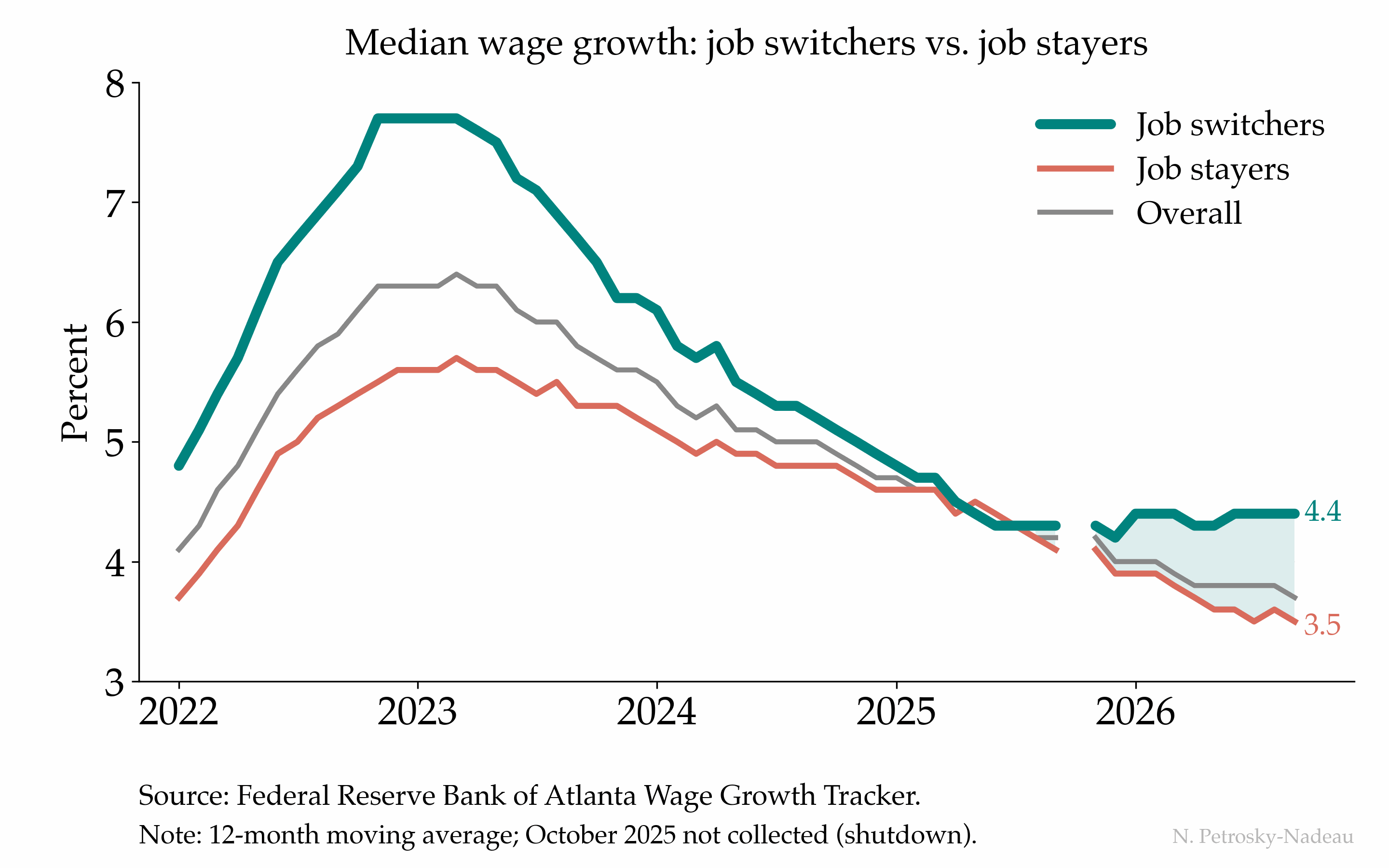
It has reopened this year. On the Atlanta Fed’s Wage Growth Tracker, median wage growth for job switchers (teal) came down from a peak of 7.7% in early 2023 to 4.2% at the end of 2025 and has held at 4.3 to 4.4% every month since, while raises for stayers (salmon) kept slowing, from 3.9% to 3.5%. The premium, 0.9 percentage point in September, is a little above its 2015–2019 average.
The series are the Atlanta Fed’s own 12-month moving averages, and the break in the lines is October 2025, when the survey was not collected. The download carries the full history from 1997.